

Understanding OSP Fiber Infrastructure Networks
In today’s digitally driven world, connectivity is no longer a luxury, it’s a necessity. Central to this connectivity is the OSP fiber network, also known as the outside plant fiber optic network. These networks form the backbone of telecommunications, ensuring high-speed data transfer over long distances. This comprehensive guide will walk you through the essentials of OSP design, OSP planning, and OSP management, helping you better understand the components, roles, and strategic importance of these networks.
Fiber optic cables
Conduits and ducts
Handholes, manholes, and vaults for access and maintenance
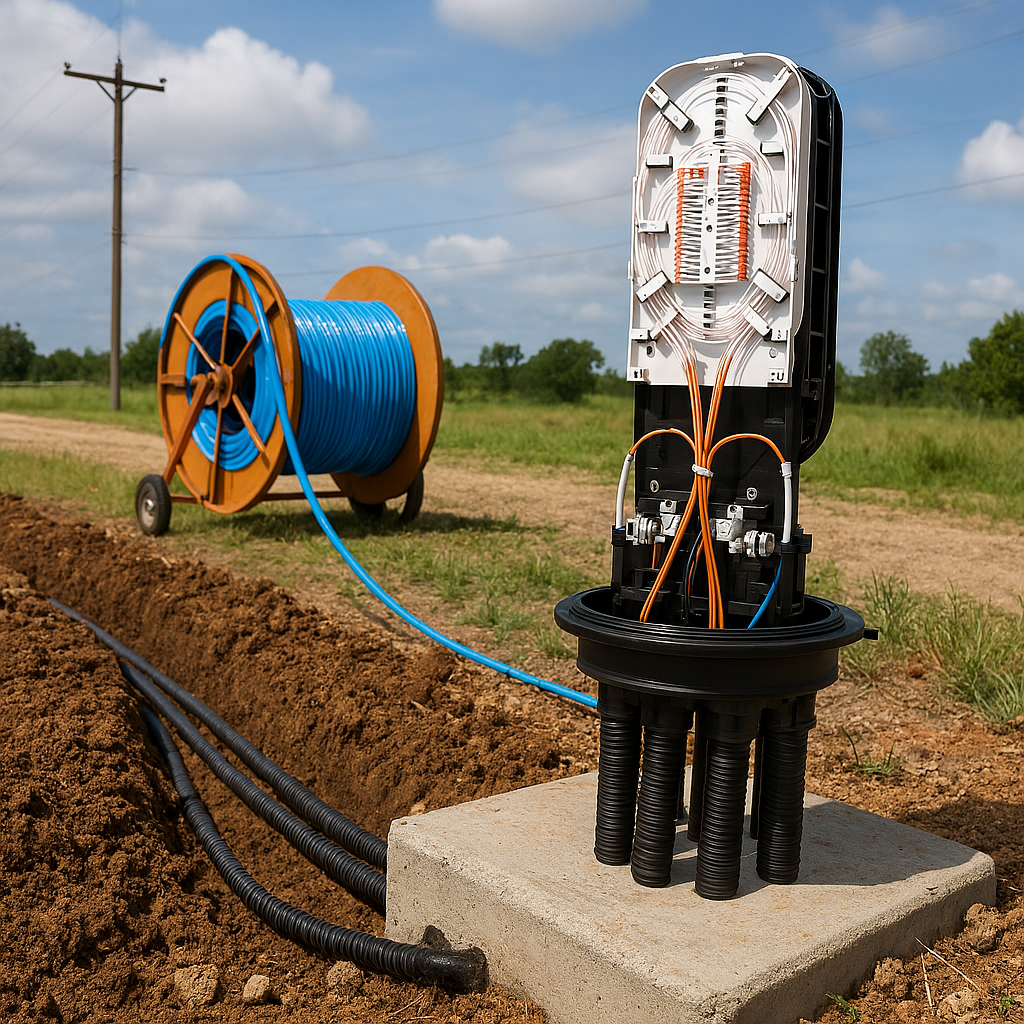
Splice enclosures and cabinets for managing fiber connections
Wireless small cell nodes linked to fiber backhaul
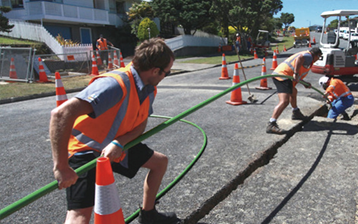
OSP design involves the planning, engineering, and implementation of the physical cabling and equipment that connect service providers to their customers. From fiber optic OSP design to OSP network planning, this specialized engineering discipline ensures high-speed connectivity, scalability, and long-term reliability.
With the explosion of data consumption, driven by cloud computing, IoT devices, 5G, and streaming services, traditional copper-based networks can’t keep up. Fiber optic OSP design has emerged as the gold standard for modern networks because it delivers:
Distribution: Transmitting data across the network
Distribution cabling involves clusters of fiber optic cables designed to move large amounts of data at the speed of light between two network points. These cables connect to the central office and then various locations called midspan nodes.The midspan node: Signal distribution hub
Think of these midspan nodes as signal distribution points, often housed in weatherproof enclosures like cabinets or manholes. At these nodes is the splitter, which efficiently divides the incoming optical signal and directs it onwards to individual locations.The premise: Bringing fiber to your doorstep
The final leg of the journey involves delivering the signal directly to your doorstep. From the midspan node, thinner cables called drop cables branch out and connect to the exterior of your building. There, an optical termination point acts as the bridge, converting the light signal back into an electrical signal that can be used by your devices through a modem and router.
Key components of OSP in fiber optics
High Bandwidth – Fiber supports gigabit and even terabit speeds.
Low Latency – Essential for applications like telemedicine, video conferencing, and online gaming.
Long Distance Transmission – Fiber carries signals for miles without degradation.
Scalability – Future-ready for upgrades as technology evolves.
Durability – Resistant to weather, corrosion, and electromagnetic interference.
OSP design (Outside Plant design) refers to the process of engineering, planning, and constructing the physical infrastructure that resides outside of buildings to support telecommunications and data networks.
Key challenges in managing OSP fiber optic networks
Why Fiber Optic OSP Design is Critical
What is OSP outside plant Design?
Conclusion
OSP design, or Outside Plant design, is the backbone of modern communication networks. Through careful OSP network planning and fiber optic OSP design, engineers create robust, scalable infrastructure that keeps the world connected. From surveying and permitting to construction and testing, every step of OSP design requires precision and foresight. As bandwidth demands skyrocket and new technologies emerge, Outside Plant engineering will continue to evolve, ensuring networks remain reliable, future-ready, and accessible to all.
Lenora Innovation
Empowering Change, Enriching Lives
Copyright © 2026 All rights reserved