

Drop Fiber Cables
FTTH Drop cables are located on the subscriber end to connect the terminal of a distribution cable to a subscriber’s premises. They are typicality small diameter, low fiber count cables with limited unsupported span lengths, which can be installed aerially, underground or buried.
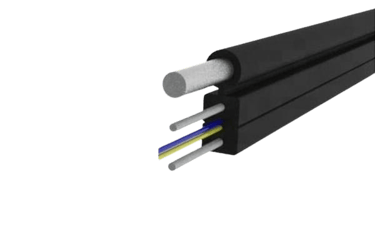
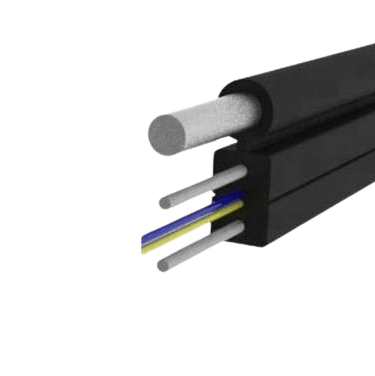
Overview:
FTTH drop cables are the critical “last mile” link in fiber-to-the-home networks, connecting the distribution point directly to the subscriber’s premises. They are designed to be compact, flexible, and durable, ensuring reliable high-speed internet delivery.
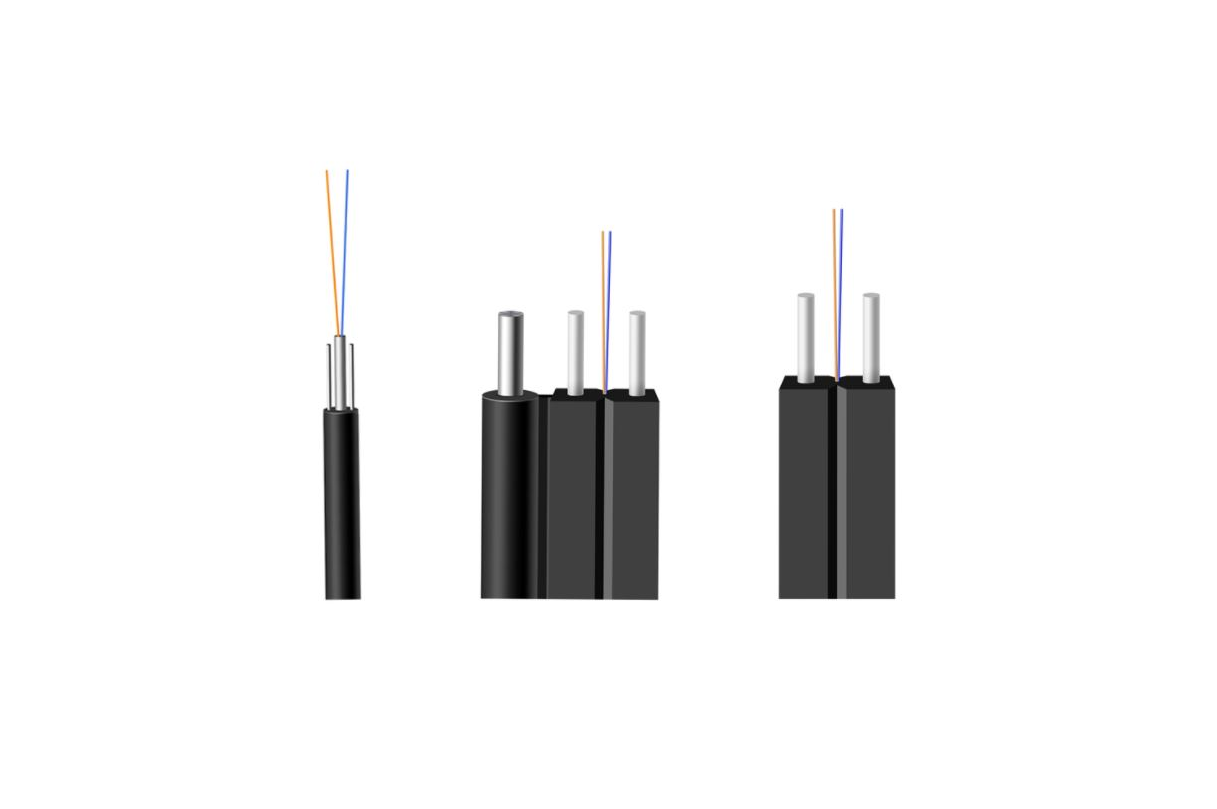
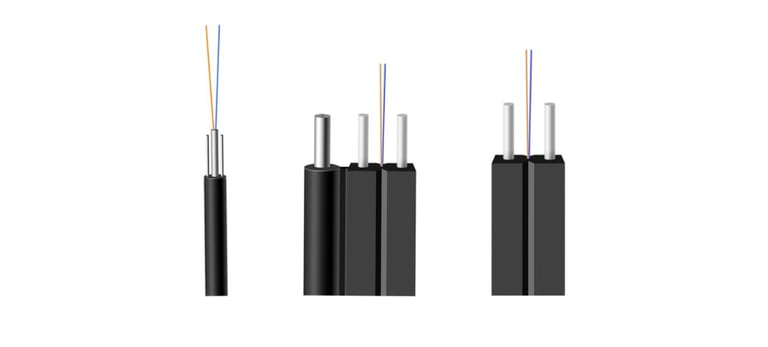
FTTH Drop cables are located on the subscriber end to connect the terminal of a distribution cable to a subscriber’s premises. They are typicality small diameter, low fiber count cables with limited unsupported span lengths, which can be installed aerially, underground or buried. As it is used in outdoor. Drop cables are available in many different types according to the cable structure. The types of drop cables are Flat Type Drop Cable and Round Drop Cable.
Application:
The FTTH Drop Cable bundles assemblies consist of a between 1~12 core, that enables installation of FTTH Drop Cable. The fiber assemblies are bundled with outer sheath is a PE or LSZH layer that is of low friction. It can be made of metal or non-metal structure. The fiber in the cable is made of G.657 small bending radius fiber, which can be laid at a bending radius of 20mm.
Smaller diameter
Excellent environmental properties
Perfect cable structure with high fiber density
Network design flexibility
The outer sheath is a PE or LSZH jacket
Drop Cable types are Flat, Round and Figure-8 cables
Fiber bundle for Uni-loose tube 1~4 core or 2~12 cores
Fiber bundle diameter: 2.0 – 6.4 mm
Singlemode or Multimode
Fiber type G.G652D, G.657A1, G.657A2
Fiber type is Uni-loose tube 1~4 core or 2~12 cores
Low friction surface for maximum installation lengths
Excellent environmental properties
Material outer sheath is PE or LSZH jacket
Temperature Performance[°C]: -30 to +60
Mechanical Performance Test compliance:
Tensile Performance: IEC 60794-1-21 Method E1
Bend: IEC 60794-1-21 Method E11
Impact: IEC 60794-1-21 Method E4
Crush: IEC 60794-1-21 Method E3
Operation Performance:
Optional Features:


Lenora Innovation
Empowering Change, Enriching Lives
Copyright © 2026 All rights reserved